Humpback Research in Hawaii

No, this is not a humpback and has nothing to do with humpback research in Hawaii.  I was just looking for a picture to post, and remembered I took this for my daughter a few months back.  This elderly ewe was named Panda, and she lived to be about 13 because my daughter absolutely insisted that I take her to the vet when we spotted her as a newborn, wriggling on the grass in the pasture, abandoned by her mother.  She was one of a pair, and definitely got the short end of the stick.  She was less than half her brother’s size, and hideously misshapen because he had taken so much room in the womb!  The vet didn’t think much of her chances, but we brought her in and my daughter bottle fed her, and she lived to a ripe old age!  I love bottle fed lambs, and the sheep they become, because they are as friendly as dogs.  As with all sheep that I’ve ever been around, they have a very calming influence on me.  For that reason alone, they are worth the effort it takes to keep them healthy!


The humpbacks have left for the 2018/2019 season.

There were far fewer of them this year, and no one yet knows why. I hope that the humpback research in Hawaii will help to solve this mystery. I did not get a chance to get out on the water to listen to their songs, but I’ve done so in the past and know that it is a peak experience. For whatever reason, listening to recordings does not compare. Perhaps it is the fact that I’m not sitting quietly in a canoe of kindred souls, in what has to be one of the most beautiful places on earth, but I think it is more than that. I don’t think the recordings capture the sound as faithfully as I would like. Here’s a link to the Jupiter Research Foundation archive of humpback songs recorded off of Pauko: http://jupiterfoundation.org/whale-song-archive-hawaii

The Jupiter Research Foundation is a non-profit organization that is devoted to helping the humpbacks, and is seeking to build a center in Kawaihae harbor.

The organization has been in existence for quite a while, and actually live-streams whale songs from the Pauko Bay Area from mid-January till mid-March. They also have a webcam that provides views of the waters of Pauko Bay and parts of the Alenuihaha Channel. It is only operational during whale season, but it’s a great resource during that time period: http://jupiterfoundation.org/webcam. They have looked at many alternatives to increase their research facilities, and have identified Kawaihae Harbor as the most promising. Here’s a newspaper article about them: https://www.westhawaiitoday.com/2019/03/26/hawaii-news/marine-research-center-proposed-for-kawaihae-harbor/

The article does not say whether the proposed center will be open to the public, but the environmental assessment does. There will be no visitors’ center, but escorted school field trips may be permitted.

If you are really interested, the Environment Assessment produced as part of their attempt to build a facility at Kawaihae is an excellent read!

It is really well-written, gives an excellent overview of the history of the area and another marine research facility that will some day be built in Pauko, and describes some of the truly amazing inventions The Jupiter Foundation has already designed and implemented that have helped in the study of Humpbacks. Here’s a link: http://oeqc2.doh.hawaii.gov/EA_EIS_Library/2019-03-23-HA-DEA-Marine-Science-Center-at-Kawaihae-Harbor.pdf
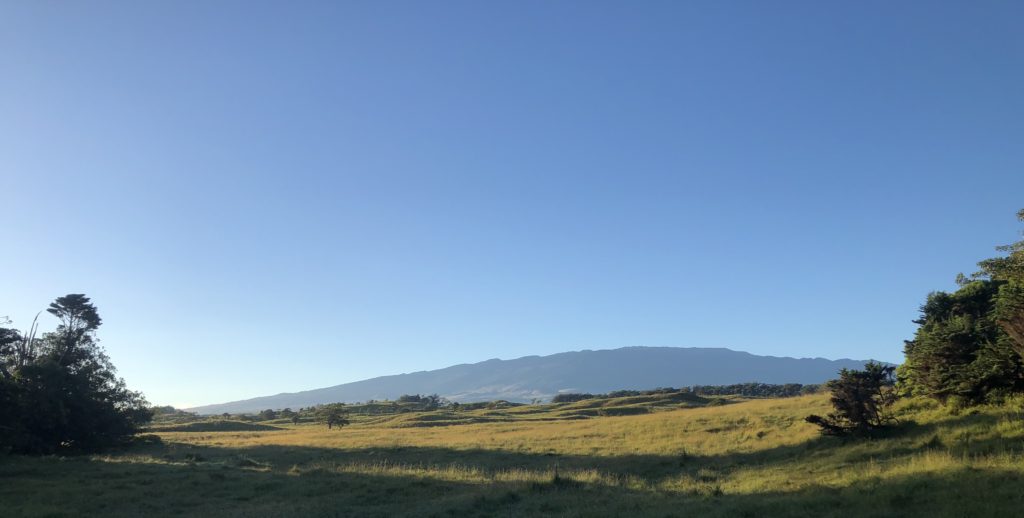
Hawaii County land use restrictions for agriculturally zoned land.

It is beautiful, but it is not for everyone!

Hawaii County is a place of great beauty and vast open spaces.  But it is also a place where the goals of food self-sufficiency and diversified and sustainable economic growth are taken seriously. At the moment, the County is heavily dependent on tourism, which leaves us in a precarious position when visitor numbers drop for any reason.  We also import an appalling percentage of our food, which leaves us vulnerable to vagaries of labor strikes and natural disasters.

Land zoned for agricultural use, Hawaii County.
Hawaii County and the State restrict use of agriculturally zoned lands

Agricultural lands receive favorable tax treatment.

First and foremost, the property taxes on land in agriculture are much lower than those on land used for residential purposes.  The actual rate is higher for some agricultural land than it is for some residential land, but the assessed values to which those rates are applied results in significantly lower taxes.  Grazing land, in particular, is assessed at about $10,000/acre for non-dedicated land, and is currently taxed at $9.35/$1000.  Homeowner rates are currently $6.15/$1000 of assessed value, but the land and improvements are assessed at market value. Also, those low homeowner rates apply only to primary residences, not to second homes or homes held for income or investment.  Rates are available here: http://www.hawaiipropertytax.com/tax_rates.html

So what constitutes an agricultural use, and where is County land use policy headed?

You can access a handy chart showing the permissible uses of land zoned in various ways here: http://www.hiplanningdept.com/wp-content/uploads/2017/09/Permitted-Uses-Table-091917.pdf

Some of the uses listed in the chart don’t do much to increase food production.  There is obvious value in keeping land in agricultural use, in the sense that it is much easier to later convert open land to food production than it is to restore land that has been used for residential, commercial or industrial purposes so that it can be safely used for such production.  But given the growing emphasis the State is placing on a diversified economy and food self-sufficiency, it is reasonable to expect increasing restrictions on use of agriculturally productive land for purposes other than food production and commercial agriculture.  The days during which a developer could easily purchase a pasture, get it rezoned and subdivided, and build and sell houses, are gone.

Current restrictions on use of agriculturally zoned land.

Even now, the number of dwellings, and the type of occupants of dwellings, are restricted on some agricultural lands.  Some lands are governed by the State Land Use Commission, and lands classified as less productive are subject to County regulation.  This is a huge topic, and while I could post links to every source that would need to be consulted in order to make a determination as to the governing body and restrictions on a given parcel, I instead advise anyone considering a purchase of agriculturally zoned land in Hawaii County to consult with the Hawaii County Planning Department.  Have the TMK of the parcel you are considering, and a planner should be able to outline for you all of the permitted and prohibited uses for that land.  See also http://livinginwaimea.com/2019/03/29/kohala-ranch-property-taxes/

Don’t plan on paying for your agricultural land purchase by selling agricultural goods!

If you want to make a profit on agriculture in Hawaii, your options are even more limited.  Some crops do reasonably well in some years, but given the cost of land, it is very difficult to thrive as a farmer or rancher in Hawaii, year in and year out.  Nonetheless, there are quite a few ranchers and farmers here.  Why?  Because even though it is very hard work, it is also endlessly interesting and occasionally very rewarding!