
How To Get the Healthcare You Need in Hawaii: 3 Tips to Consider Before You Move

blue and silver stetoscope
Photo by Pixabay on Pexels.com

Do you require frequent medical visits, specialists, and accessible treatment options? Before moving to Hawaii it is helpful to know your options and prepare for what’s covered by your insurance, what requires inter-Island travel, and alternative healthcare options.

Medical facilities and insurance coverage can be limited depending on where you live and waiting times vary depending on what care you need. There is a doctor shortage on the Big Island, and in Hawaii generally, and when it comes to specialist care (dermatologist, podiatrist, rheumatologist, neurologist, Mohs surgeon, etc.) it is common to drive long distances, fly to Oahu for care that’s covered by insurance, or to pay cash for services on the Big Island. 

Why Pay “Out-Of-Pocket”?

While cash pay sounds scary, so is paying a high insurance premium that doesn’t cover services you need. With rising insurance premiums, consider progressive ways healthcare clinics provide efficient and quality care with cash pay models. So, where do you start? 

First, know that there are wonderful traveling nurses, doctors, physician assistants, and specialists on the Island that provide excellent care. Some offer partial insurance reimbursement plans, yearly membership benefits, and virtual visits.

Some residents opt-out of traditional insurance and use catastrophic insurance with high deductibles and pay cash for specialized care. If you need traditional insurance coverage, start looking online here to check your options based on income.

Last Things to Consider

Do you require frequent checkups? Dental care, specialized visits, and will you live closer to Waimea, Kona, Waikoloa, or Hilo? Look into clinics nearby and what insurance or plans they take. In Hilo, one of my personal favorites is Mahinakealo Dermatology (because when you live in Hawaii, you need a Dermatology clinic). Marne Carmichael Walsh PA-C provides the most detailed and patient-focused care in the Hilo community. While Mahinakealo Dermatology offers reasonable cash pay options and reimbursements now, the office will take HMSA, HMAA, and UHA at the start of 2021. 

In Kona, Elite Smiles Dental has a discount program for individuals and families with a small yearly fee. In Waimea, Iris Integrative Health has successfully created an affordable subscription healthcare model clinic utilizing western and naturopathic medicine. 

There are three main hospitals in Hawaii: North Hawaii Community Hospital Queens Medical Center in Waimea, the Kona Community Hospital down South, and The Hilo Medical Center on the Eastside of the Island. Urgent care clinics are also commonly used for quick care and family medicine concerns. 

There are many factors involved, so be prepared to make shifts as you consider life on the Big Island. Many local residents are happy with the healthcare quality on Island, but it is best to know your options and avoid the frustration of having insurance that not all offices take because it is “out of network.” So, is there a clinic or doctor you go to on the Big Island? There are many more to mention, so be sure to share in the comments. 

Contact me Here to learn more about available listings and information about life on the Big Island of Hawaii.
Hawaii Isn’t Ready for Surge of Tourism During COVID

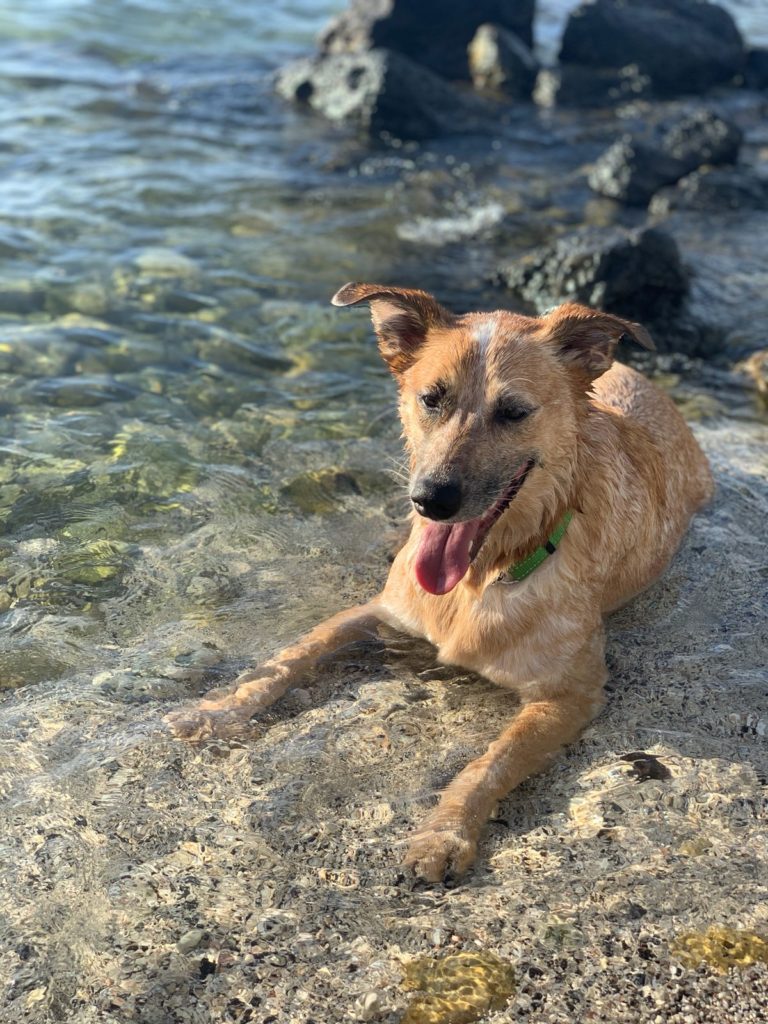
Dog enjoying tourist-free beach
Zuma enjoying uncrowded beach

Hawaii isn’t ready for tourism. Most people in Waimea would just as soon never see another tourist in their life. See my post on Life in Waimea during quarantine: http://yrh.ewp.mybluehost.me/2020/03/29/life-in-waimea-while-in-coronavirus-quarantine/

On top of that, we have a rather serious Covid outbreak going on here. Our numbers may look good compared to some places on the mainland, but we are stuck in the middle of the Pacific Ocean, and when we run out of beds or ventilators, patients can’t be easily shipped to another hospital. And many of the hospitals we have are rural, and not equipped to deal with seriously ill patients.

As of today, there are 135 people in the State hospitalized with COVID, including 25 in intensive care. Hospital beds are 65% full, and intensive care beds are 54% full, according to Honolulu Civil Beat.

We have lost 27 veterans who lived at the veterans home in Hilo to COVID. People who lived in another nursing home in Hilo have also died. Hawaii County continues to have too many new cases every day. The politicians blame the locals, but there is no way having tourists here is going to make things safer.

Many residents are incensed by this betrayal of our interests in favor of the tourist industry. Here’s one take on the situation, and I like the characterization of Hawaii County’s mayor in this article: https://www.civilbeat.org/2020/10/lee-cataluna-hang-on-for-hawaiis-iffy-reopening/ (“a stubborn badass”).

One of our more prominent part-time residents, billionaire Marc Benioff, tweeted this recently:

“Amazing leadership by Hawaii County @MayorHarryKim creating a multi-test protocol for reopening of Hawaii & stopping the insane 1 test plan of @GovHawaii & @DrJoshGreen. Oahu, Kauai, Maui & others all must adopt a multi-test protocol. Just look at this testing model!”

Hang on is right, Lee Cataluna-this is not going to be pretty! Hawaii isn’t ready for tourism, and we’re scared!

The Unfortunate Truth About Living in a Melting Pot: Hawaii and Racism

Racism is alive and well in Hawaii. It just looks a little different that it does on the mainland. Quite a few years ago, a woman I had recently met exclaimed “Judy, they’re prejudiced against us!”

This woman was caucasian, from the western US. I guess she thought that if she could be magnanimous enough to overlook other people’s skin color, they should do the same for her? She lasted less than a year before moving back to the mainland.

The good old days.

I was born in Hawaii in 1954, and have lived here most of my life. There were Kill a Haole (caucsian) days at the public schools when I was growing up. The local kids would pelt our car with guavas when we drove through Hawaiian Home Lands. There were parts of Oahu where haoles were not safe. I was aware of the hostility, but it never really bothered me.

I’m pretty sure the private school I attended admitted only caucasians and Hawaiians when I was young (it’s a little foggy). I know my step father was the first president of one of the private clubs in Honolulu to successfully argue that admittance should not be limited to haoles.

Things had changed a little by the time I was in high school. There was a flourishing of Hawaiian language and culture, giving pride to many Hawaiians for the first time in generations. The music produced during that time was fantastic, and included a hilarious song by Keola and Kapono Beamer called Mr. Sun Cho Lee: https://youtu.be/kS2YLvGGtwY In it they made fun of many races, but in a gentle way. It concludes with the lines “one thing I wen notice bout this place, all us guys we tease da otha race, it’s amazing we can live in da same place”.

Not any better now.

Those were gentler times. As more and more people have moved to Hawaii, consuming more of the resources and trying to impose their values on the locals, resentments have grown. Life used to be easy, and now many locals are hard pressed to make a living. Many are working multiple jobs, and, as real estate prices rise, commuting to work for hours each day. When they do have a little time to relax, they are being crowded out of the places they used to love by throngs of tourists.

While most local people are gentle, fun loving, and generous, there are definitely people who hate haoles. I know several people in my town who will never acknowledge me, and I’m fine with that. I understand why some locals, and especially Hawaiians, despise haoles.

Here is an account from someone who spent time in Pahoa: https://www.theprofessionalhobo.com/racism/

And some follow up to comments to an article published in the New York Times about how people in Hawaii are less racist: https://www.nytimes.com/2019/07/10/opinion/hawaii-race-ethnicity.html?referringSource=articleShare

Be prepared to earn trust, or be isolated.

Racism is alive and well in Hawaii. Don’t expect to be given a free pass if you’re white. You need to prove that you are honest, humble, hard working, respectful and generous, or you will never be accepted by most locals. http://yrh.ewp.mybluehost.me/2019/07/25/the-hawaiian-people-and-their-culture-make-hawaii-a-unique-paradise/

There are certainly caucasian enclaves, and as long as you’re happy remaining in such an enclave, you may be happy here despite the hostility of many locals. But then, why live here?

Are Urban Dwellers Fleeing? Latest Zillow Numbers Don’t Support That Myth

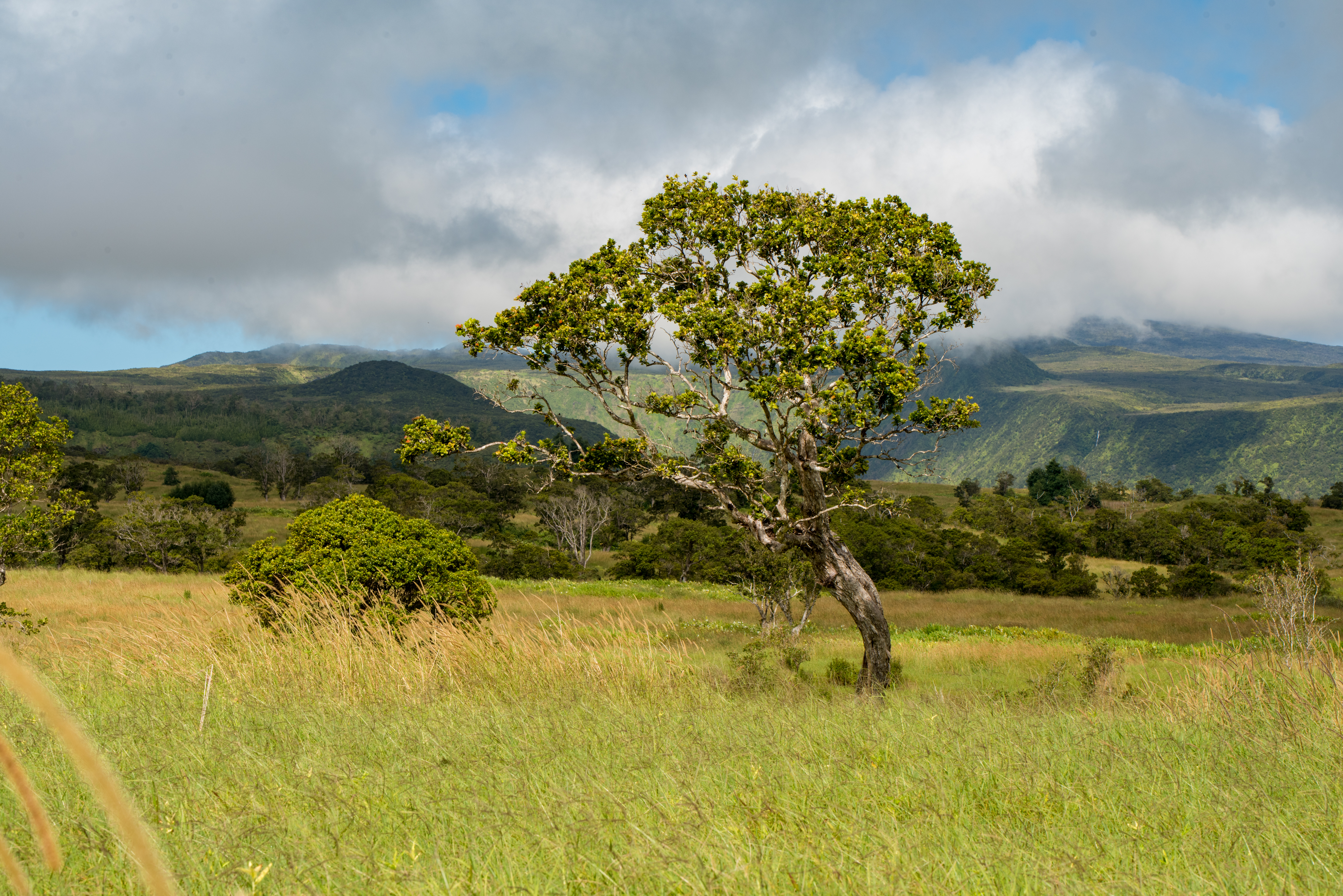
Waikoloa Road, with Kohala Mountains to right, Haleakala (Maui) in center of photo.
Photo by Sarah Anderson

Zillow Research shows little change.

We’ve all been hearing lots of anecdotes about urban dwellers fleeing to less dense areas. Zillow has some of the best data around when it comes to home buying and home renting. Nationally, their numbers show very little change in behavior:

https://www.zillow.com/research/2020-urb-suburb-market-report-27712/

Re-fi’s may soon be subject to additional fees

One change that may have an effect on buying habits is the announcement that federally-backed mortgage refinances will be required to tack on an additional fee: https://www.inman.com/2020/08/13/new-fannie-and-freddie-fee-could-push-homeowners-off-the-fence/

Unless the rule is changed, it may make more sense for some people who are seeking to refinance to move instead.

Local market is generally slow

Locally, the housing market has slowed. Sales are perking along, but the threat of another stay at home order, on top of the 14 day quarantine that has been in effect for months, has hurt the local economy. Also, most of the people who were employed in the hospitality industry are out of work.

I listed a nice, turn key condo in Waikoloa Village last week, and the silence has been deafening! It was the lowest priced unit, with an appliance allowance and a generous split for the participating broker, which would have been enough to get the offers rolling in pre-COVID, but between the unemployment problem and the difficulties with travel, it is likely to be a while before it sells. And I’m going to have to work hard! Are urban dwellers are fleeing? No, at least not to condos in Waikoloa Village.

Here’s a photo of the condo:

Photo by Sarah Anderson

Here’s a link to the listing: https://reserver1.hawaiiinformation.com/REsearch6/sites/HIS/Areas/SearchHIS/ASP/results/displayEmail.asp?sender=79931&id=2694531&t=637331860898080738

There are obvious drawbacks to buying a second home in Hawaii

There are some people who are interested in buying in Hawaii as an escape from urban areas on the mainland, but many people are put off by flying, which is reasonable, as well as the 14 day quarantine. We need that quarantine on the outer Islands, though! The big hospitals in Honolulu are filling up so quickly that they have announced that they will not accept transfers of COVID-19 patients. The studies have shown that seriously ill COVID-19 patients do much more poorly in rural hospitals, so we need to avoid having the disease spread beyond Oahu!

Here’s a link to my webpage, if you’d like to browse

This is a great time to browse photos of Hawaii real estate! Here’s a link to my site: http://Judyhowardrealtor.com

Waimea On Memorial Day Weekend-Pandemic Version

Photo by Sarah Anderson

On this Memorial Day weekend, it’s much quieter than usual, which is lovely. Of course, there are none of the usual public events taking place, which is a disappointment to many.

Hawaii had one of the highest levels of compliance with its stay at home order, according the cell phone tracking data. Our diligence and public spiritedness was rewarded by remarkably low infection rates.

Our beaches have now been opened, but there is still a mandatory 14 day quarantine of all arrivals. According to friends of mine, some of the people at the beaches are clearly tourists. We have not done a good enough job of finding and arresting those who are violating our quarantine law for all arrivals. But we’re getting better at it!

The cheaters should not expect to be tolerated, let alone greeted warmly. They and any local who helps them violate the law deserve to be treated harshly. They are putting their own pleasure ahead of the safety of the residents of Hawaii, which is despicable.

But there are many wonderful things happening, and in this blog I want to focus on two that involve students at Waimea Middle School. (For more on our schools, see http://yrh.ewp.mybluehost.me/2020/03/05/waimeas-schools/)

First, Kamaha’o Ocean, a 14-year old 8th grader at our local public school, has put together a great CSA program. He’s sourcing meat, fish, fruit and vegetables from local ranchers and farmers (the most recent fish, menpachi, is from an open ocean fish farm), and putting together weekly bags. It has forced me to cook with different ingredients, which has been great fun. http://www.painabyocean.com There is a story about his efforts in the May edition of Honolulu Magazine: http://www.honolulumagazine.com


Of course, his is not the only CSA program in Waimea, but I find it particularly thrilling because of his age, and rather enjoy the fact that he includes meat and fish as well as fruit and vegetables. I usually eat a very plant based diet, but I’m glad to support local meat producers during this time.

Another Waimea Middle School effort, also involving food, is their distribution of Kokua Kits to their students. These include books, seeds, and food harvested from the school’s Mala’ai Garden. Here’s the link: https://www.westhawaiitoday.com/2020/05/23/hawaii-news/its-just-who-we-are-waimea-middle-school-delivers-2000-plus-kokua-kits-to-students/

There are many people here who are struggling financially. If they were dependent on the tourist industry, they have almost certainly lost their jobs. Hawaii has one of the highest unemployment rates in the nation at the moment. It seems inevitable that many people who moved here to enjoy the beaches and work at the hotels are going to need to move back to the mainland. Realtors have seen an impressive slow down in activity, as everyone tries to sort out what things are worth in this new world, and to determine what their financial future looks like.

We have probably had longer-lasting shortages than people on the mainland experience. No one had hand sanitizer for months. Local distillers have stepped in the make enough. I bought some at ACE with hemp oil in it (because that was what was available), and I’m glad to have it. It has a funny, gritty, texture as it dries, but it is certainly better than nothing. Flour is still in short supply, along with pet food and toilet paper.

I can’t imagine our lives will ever go back to the way they were, but there were plenty of ways in which we could have done better, and now we have the chance to do so. On this Memorial Day weekend, we have much to look forward to!